An executive dashboard the CEO can question
Data sat in five systems and reached the CEO through five people. Definitions took three sessions. One metric was published as a known gap instead.
One metric published as a gapRead the case→Work

Every case answers the same four questions: why that process was selected, what work was done before anything was built, what was built, and what changed a few months later. Sectors, sizes, and functions are stated, because those are what make a case useful to read. Names are not.
The template
A consistent template is what makes ten cases comparable instead of ten stories. It also makes it obvious when a case is thin, which is the point.
What made this particular workflow the one worth automating, and why the shape of the task suited a system rather than a busy person.
Workshops, definitions, and data cleanup. It is usually most of the timeline, and it is the part clients underestimate.
The components, what they refuse to do, and where they still get it wrong. Including the streams that were scoped and stopped.
Not at go-live. Months later, when the novelty has worn off and the thing is either still running or quietly abandoned.
The cases
Showing 10 of 10

Data sat in five systems and reached the CEO through five people. Definitions took three sessions. One metric was published as a known gap instead.
One metric published as a gapRead the case→

Coding, matching, and commentary drafting are pattern work. The ledger stayed off limits by design. Constraints were written before the build, and auditors were briefed early.
Nothing touches the ledgerRead the case→
Mismatches surfaced at goods receipt, far too late to act. Extraction, three-way matching, and an exception queue moved the discovery forward to the confirmation stage.
Handwritten extraction droppedRead the case→
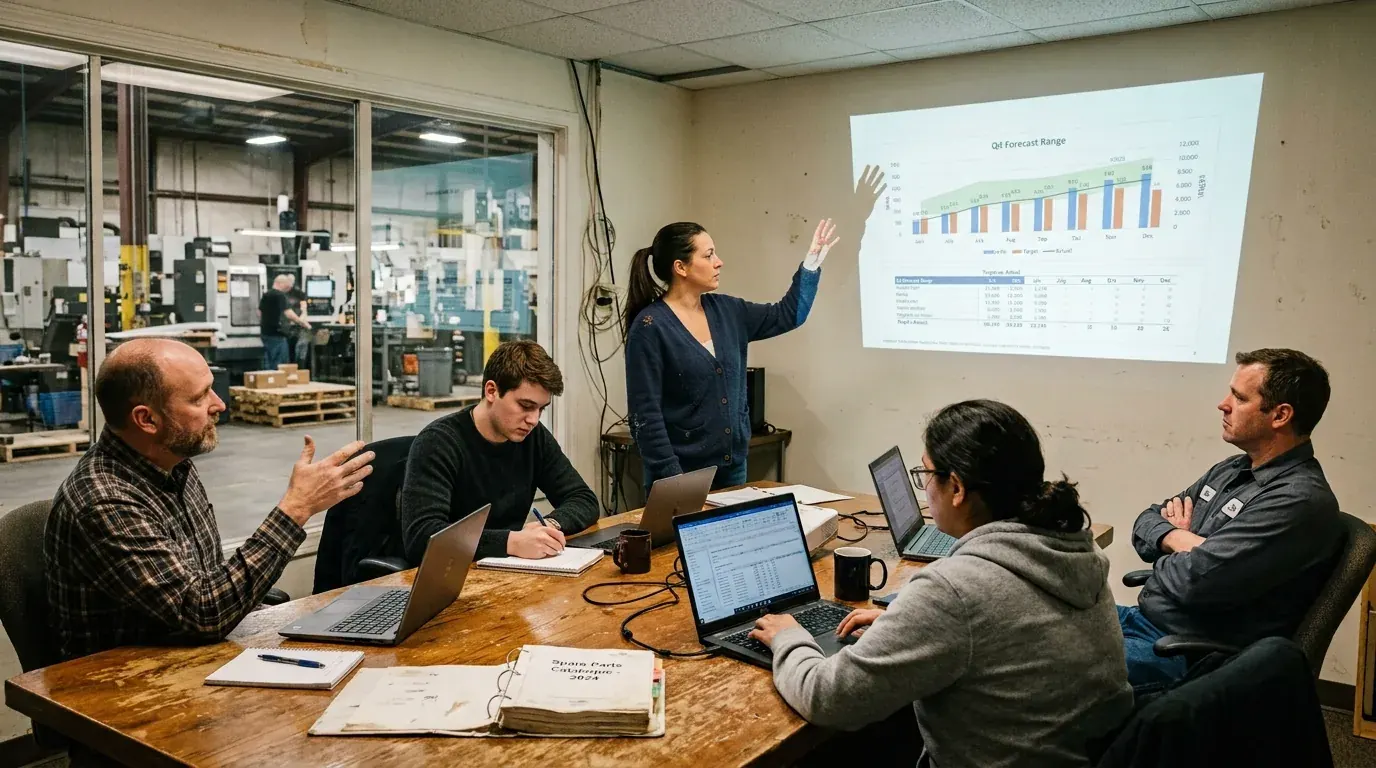
The forecast held one version of the future at a time. Scenario capacity was the goal, not a better number. Ranges, logged assumptions, human ownership.
A range, never a pointRead the case→
Most inquiries were the same five questions. Triage, retrieval, and drafting handle those now, with a conservative escalation rule and weekly sampling of automated sends.
A written never-automate listRead the case→
Pricing logic lived in three people’s heads. Writing it down was most of the project. Sales now checks and sends rather than assembling from scratch.
The pricing logic, written downRead the case→
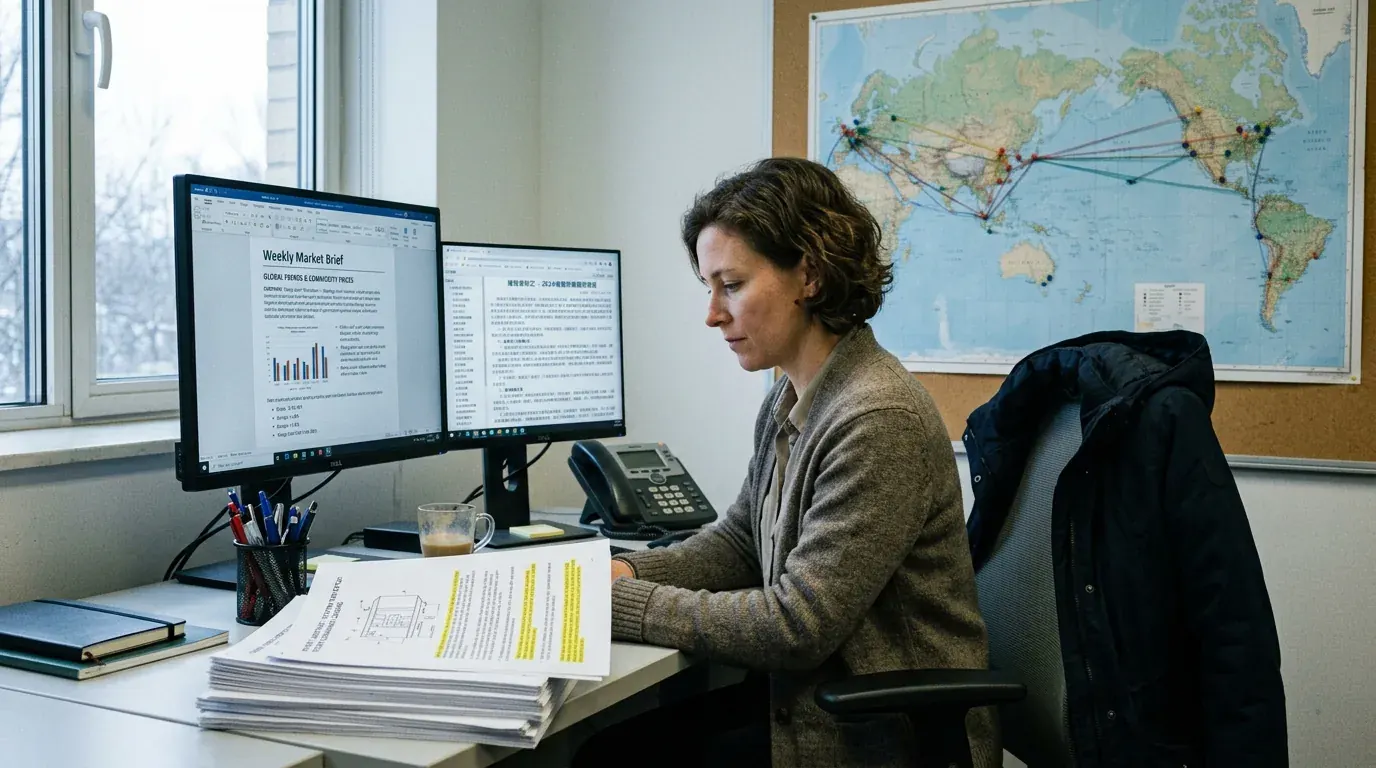
Chinese-language sources were invisible to a team of four. Ingestion across two languages, weekly briefings with dated primary sources, and one monitoring stream we dropped.
Social listening dropped after six weeksRead the case→
Every platform counted differently and a view was not a view. A metric dictionary came first, then normalization, then reports that show source disagreement openly.
Discrepancies shown, not averagedRead the case→
Two people ran both ad platforms alongside everything else. A campaign workspace now drafts, tests, and adjusts. Neither ad manager gets opened in normal operation.
Both ad managers retiredRead the case→
A food company wanted tailored assets, not more assets. Brand context packs, retailer formats, a hard legal gate, and one production stream that got stopped.
Video generation stoppedRead the case→What got stopped
A video stream that could not meet accuracy requirements. Handwritten document extraction that cost more to check than to key. A metric published as a known gap rather than approximated. A monitoring source dropped after six weeks. Stopping is part of the method, so it stays in the record.
On-pack accuracy could not be held to brand standard, and music and talent rights were unresolved.
Checking the output cost more per document than keying it from scratch. Those suppliers moved to a portal.
It could not be computed at a quality anyone should act on, so it shipped as a documented gap instead.
Six weeks of trial surfaced nothing the other sources had missed. Dropped rather than tuned.
Two conventions worth knowing
Nothing here is estimated or rounded up from memory. Every figure that appears has been checked by the client and cleared for publication. Where a figure is missing, the outcome is described in operational terms instead.
Sector, size, and function are stated, because those are what make a case useful to read. Names are not. If you want a reference conversation, we will ask the client directly rather than publishing their logo and hoping.
Talk to us
A conversation with the senior team about your markets, your data, and where AI would actually pay back for you. No slides, no obligation, and if the honest answer is that AI is not your next move, you will hear that too.
Prefer email? hello@bearingbridge.com